

Power Steering Repair in Overland Park & Kansas City
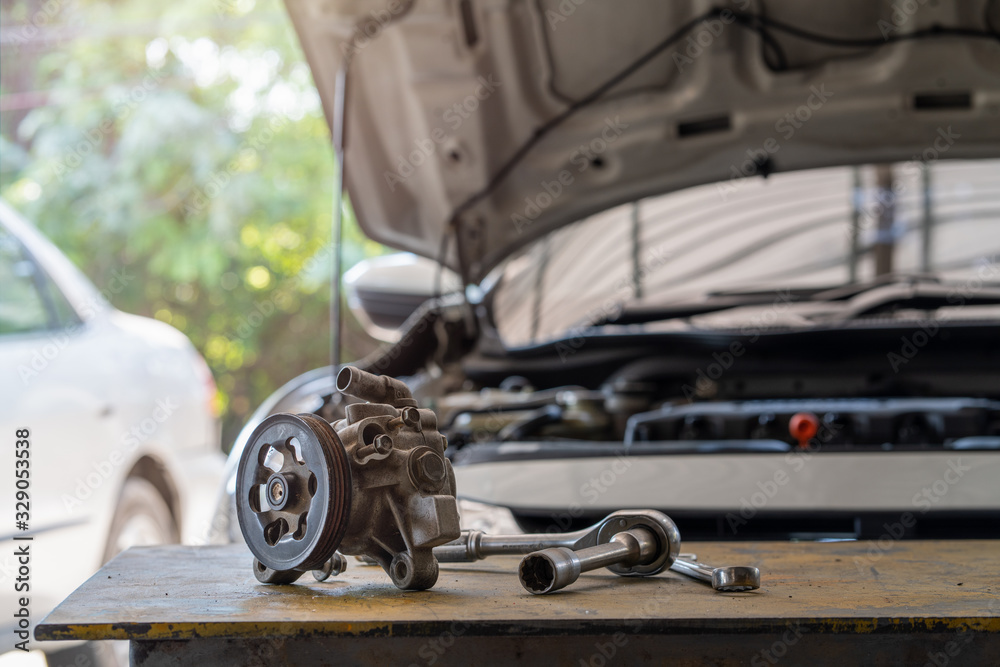
If your steering wheel feels stiff, makes whining noises, or becomes difficult to turn, you may need power steering repair in Overland Park. At McCarthy Honda Service Center, we provide professional power steering diagnostics and repairs for drivers throughout Kansas City, Leawood, Lenexa, Shawnee, and Olathe.
Your power steering system plays a critical role in safe handling and smooth driving. Ignoring steering issues can lead to expensive repairs and unsafe driving conditions. Our certified technicians use advanced diagnostic tools to identify leaks, pump failures, and steering rack problems quickly and accurately.
Schedule your appointment today using our online service scheduler.
Power steering has been around for well over a century, but it’s widely accepted that it arrived on the general production car scene sometime in the early 1950s. Since its widespread implementation, it’s been a massive hit with drivers around the world. Nowadays, most of us couldn’t even imagine driving without it.
The power steering system’s main function is to make turning the wheel easier. Considering how important steering the car is, if something goes wrong with your power steering, it’s kind of a big deal. Let’s check out some power steering basics, what to watch for, and how to address any problems.
Power Steering Basics: Hydraulic vs. Electric
Before we address common power steering problems and their solutions, let’s briefly go over the basics. There are two main types of power steering systems.
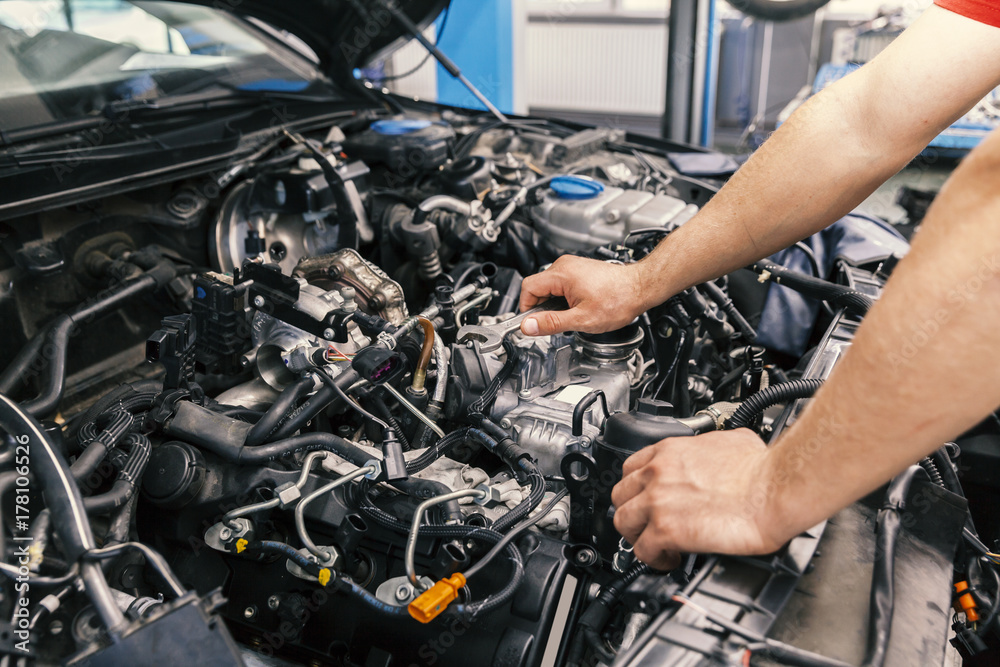
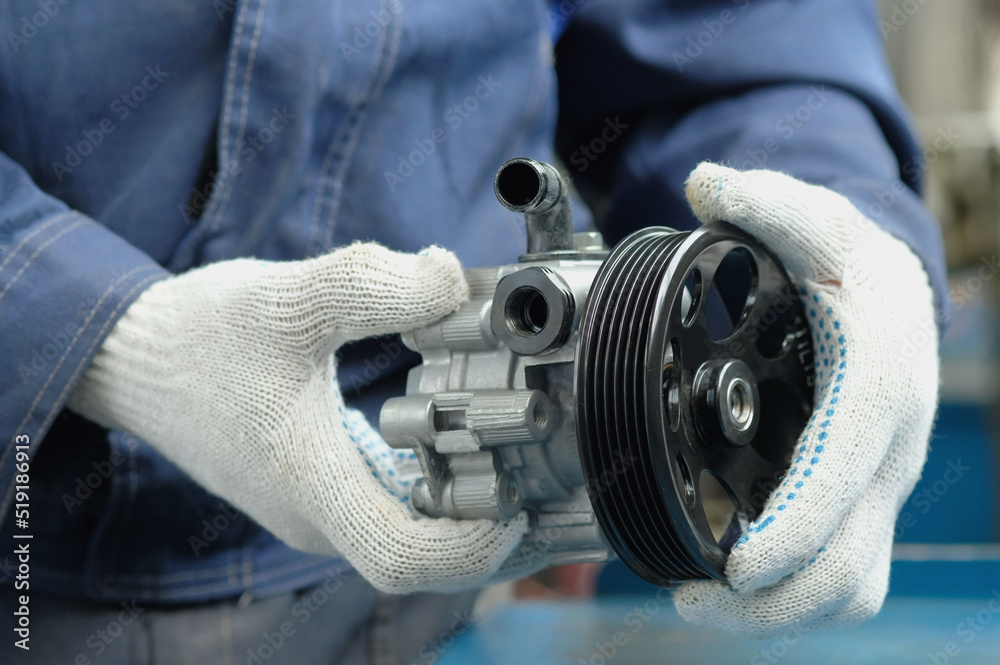
Hydraulic power steering relies on a closed system filled with pressurized power steering fluid. The fluid is pushed through the system by a power steering pump, which is driven by a belt attached to the engine. Hydraulic power steering was most common in vehicles for a long time, and therefore engineers have had a lot of time to perfect the process. The benefit of hydraulic power steering is that it’s considered to give the driver a more authentic “feel” for the road, so a lot of performance-oriented vehicles and some pickup trucks still make use of hydraulic.
Electric power steering has been the preferred system for most consumer vehicles for a couple of decades now. If you have a car that was made after the turn of the century, there’s a pretty good chance it has electric power steering. This system is simpler, and therefore usually easier to repair if something goes awry. It doesn’t require power steering fluid, and cars with electric power steering tend to get slightly better gas mileage because the electric motor operates independently of the engine. Electric power steering also allows for advanced driver assistance systems like lane keeping assist and corrective steering.
Electro-hydraulic power steering systems also exist. They are a hybrid between hydraulic and electric, but this system never really gained much traction outside a few niche models.
Power Steering Maintenance
If your power steering system goes kaput, you’re probably going to notice it immediately. Turning the wheel will become noticeably harder, especially in low-speed areas like neighborhoods and parking lots. You may also notice certain noises when you turn the wheel, or find puddles of fluid underneath the vehicle.
When diagnosing power steering problems, here are some key things to look out for.
If your power steering system goes kaput, you’re probably going to notice it immediately. Turning the wheel will become noticeably harder, especially in low-speed areas like neighborhoods and parking lots. You may also notice certain noises when you turn the wheel, or find puddles of fluid underneath the vehicle.
When diagnosing power steering problems, here are some key things to look out for.
The Steering Wheel is Stiff or Unresponsive
This is the main sign that tells you that you’re having power steering pump problems or electric motor failure. Either can cause the steering wheel to become sluggish. In hydraulic systems, the power steering pump and the connected belt are usually the main culprits these parts wear out over time and have to be replaced.
Electrical systems are a bit more straightforward, but they can still fail over time, sometimes due to excessive heat from the engine. Difficulty steering can sometimes be the only electric power steering failure symptom because there is no pump or belt to make strange noises, and no fluid to potentially leak out. Often, electric power steering failure will also be accompanied by a check engine light, or a diagnostic in your driver info display if you drive a newer car with better infotainment options.
Wheel Pulls to One Side
This issue is often mistaken for a suspension or alignment problem, but it can also be caused by something like a power steering pump leaking.
Electrical power steering failure can cause this too. When a sensor component goes haywire, it can cause the power steering motor to overcorrect in one direction or the other, resulting in an uneven drive.
Obviously, this is an extremely dangerous issue if the vehicle is listing erratically to the left or right, it’s best to pull over and have the car towed to the nearest service center.
Whining Noise When Turning the Wheel
If you experience a high-pitched noise from the front end when you execute a turn, it can often be explained by a noise from the power steering pump. This whining noise usually coincides with the telltale difficulty with steering.
Sometimes, whining noises can also be present in electric systems. The noise can be caused by the gears in the electric motor grinding against each other. This can be catastrophic if left unattended. If you notice a whining when you turn the vehicle, you should take it to a shop for service immediately.
Squealing Noise When the Car is Turned On
Sometimes, the car may not make noises during turns. Instead, you may hear an unpleasant high-pitched sound when you first fire up the engine. This is usually the sound of a belt slipping, and it could very well be the power steering belt.
As with other rubber parts, belts should be replaced at regular intervals according to the guidelines laid out in the vehicle owner’s manual. Checking belts should be a part of routine tune-ups. If left unattended, the belt can snap and further damage the system.
Reddish-Brown Puddle Beneath Vehicle
When it first goes into the system, fresh power steering fluid is usually a fairly vibrant red. Over time, it collects debris and takes on an increasingly dark brownish hue.
If you come out to your car to go to work in the morning and you find a similarly-colored puddle beneath the front end, it’s likely that your power steering has leaked while the car is off. Leaks can develop pretty much anywhere in the system. it may be a faulty or cracked hose, or it may be leaking directly from the pump. Leaks can happen as a result of regular wear over time, or due to damage caused by a pothole or other collision. Much like the engine belts, it’s important to have a mechanic inspect the quality of all hoses regularly. A leak in the hydraulic system means that the pressure will be thrown out of whack, which will make the car harder to steer over time.
Power Steering Fluid is Gray
In most cars with hydraulic systems, you can easily check your power steering fluid levels in your driveway in a matter of minutes.
If the fluid has taken on a pale grayish tone, it could be a symptom of air in the power steering system. The air oxidizes the fluid, which renders it unable to do its job properly due to reduced pressure. The power steering system is meant to be a closed loop, and any air penetration is indicative of a leak somewhere along the line. A technician will be able to find and diagnose a hole in the system.
Groaning From the Front End
This sound is distinct from the high-pitched whining that can accompany a faulty component. A low groaning is often a sign that you’re due for power steering fluid replacement.
Much like engine oil, part of the hydraulic fluid’s job is to lubricate the internal components of the system. Over time, power steering fluid contamination occurs because of collected engine detritus. Because of this, in hydraulic systems, power steering fluid must be replaced at regular intervals. Sources vary wildly concerning how often to replace power steering fluid some say as many as 80,000 miles, others as few as 30,000. To determine when to replace power steering fluid, you should consult your owner’s manual.
This is perhaps the most important thing when it comes to maintaining the health of your power steering system long term. Gunked-up power steering fluid will eventually clog the pump, which will skyrocket the cost of fixing the power steering.
Honda Repair in Kansas City – Choose McCarthy!
Are you dealing with Honda power steering problems? Whether you have a late model with an electric system or an oldie-but-goldie with the hydraulic setup, our expert Honda technicians have you covered. Give our Overland Park service center a call at (913) 648-5400, and be sure to check out our service specials we have running year-round while you’re at it!


